 se
se
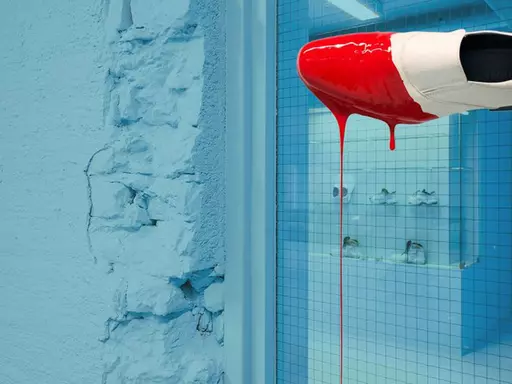
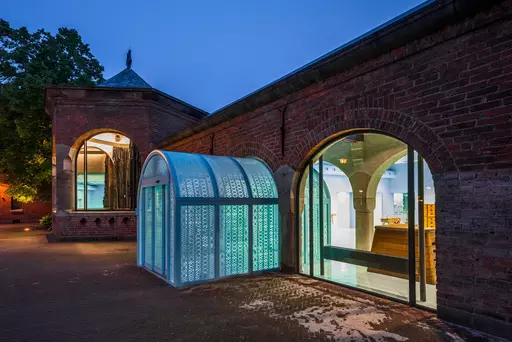
The transformation of the former city hall into SLEM repositions an existing civic building as a temporary hub for shoe and leather education, production and exhibition. The project responds directly to a set of urgent societal challenges by combining learning, craftsmanship and culture under one roof. Through a strategic design intervention, the building gains a strong and recognisable identity while generating social, economic and ecological value. From the outset, the project was organised to actively involve the local community in both its realisation and long-term use.
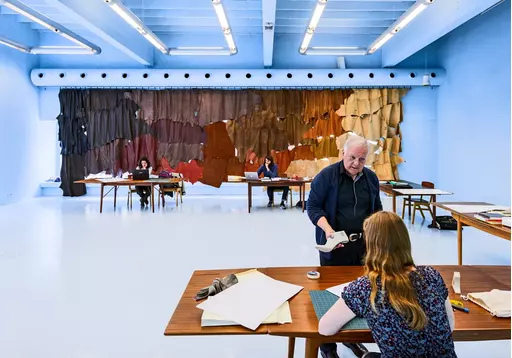
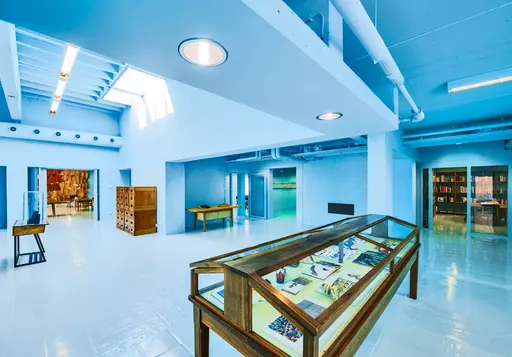
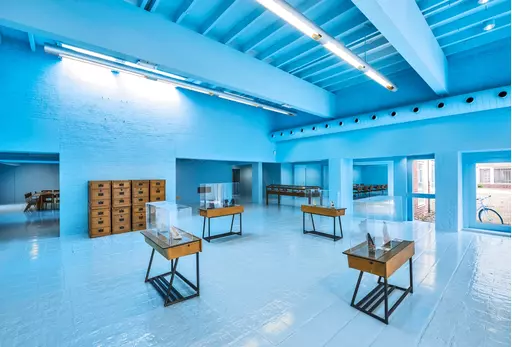
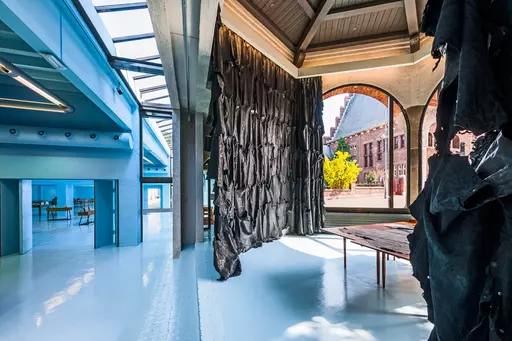
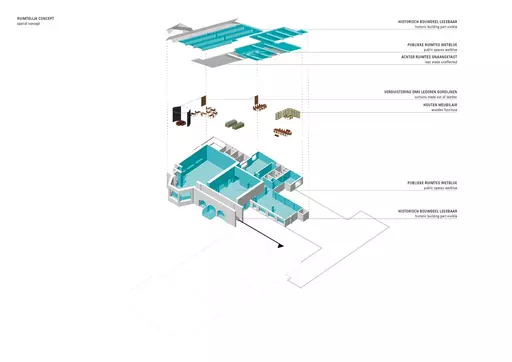
The spatial concept deliberately avoids a strict separation of functions. Education, exhibitions and public activities are designed to cross-fertilise, encouraging interaction and exchange. This required a careful reorganisation of the previously fragmented interior. By opening up the building from within, reconnecting spaces and removing later additions—such as suspended ceilings, counters and an oversized entrance canopy—the original architectural clarity of the structure was restored and made legible once again.
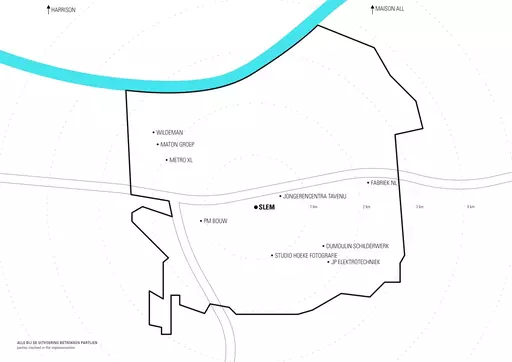
Large windows on all façades establish a strong visual relationship between the interior and its surroundings. A single, warm colour—referencing newly tanned leather—was introduced to contrast with the existing brick architecture and to visually connect all internal areas. This colour strategy reinforces the unity of the diverse functions while forming the visual identity of SLEM. All implementation partners came from Waalwijk and its surroundings, with demolition, finishes and furnishings realised locally. By combining craftsmanship, education and participation, SLEM offers the city a contemporary place for cultural exchange with lasting social and economic impact.
Large windows on all façades establish a strong visual relationship between the interior and its surroundings. A single, warm colour—referencing newly tanned leather—was introduced to contrast with the existing brick architecture and to visually connect all internal areas. This colour strategy reinforces the unity of the diverse functions while forming the visual identity of SLEM. All implementation partners came from Waalwijk and its surroundings, with demolition, finishes and furnishings realised locally. By combining craftsmanship, education and participation, SLEM offers the city a contemporary place for cultural exchange with lasting social and economic impact.
Project credits
Client
SLEM foundation
Location
Waalwijk, the Netherlands
Program
920m2 flexible space for education and museum
Status
Realised 2013
Design credits
Design
Duzan Doepel, Eline Strijkers with Lieke Genten, Marco Gazzola, Maria Orihuela, Chantal Vos
photography
Teo Krijgsman


related projects

Edinburgh, Scotland

Rotterdam, the Netherlands

Rotterdam, the Netherlands